
Venue
Venue
The Institute of Oceanology, Chinese Academy of Sciences (IOCAS), West Coast Campus
Situated at 88 Haijun Road, West Coast New Area, Huangdao District, Qingdao
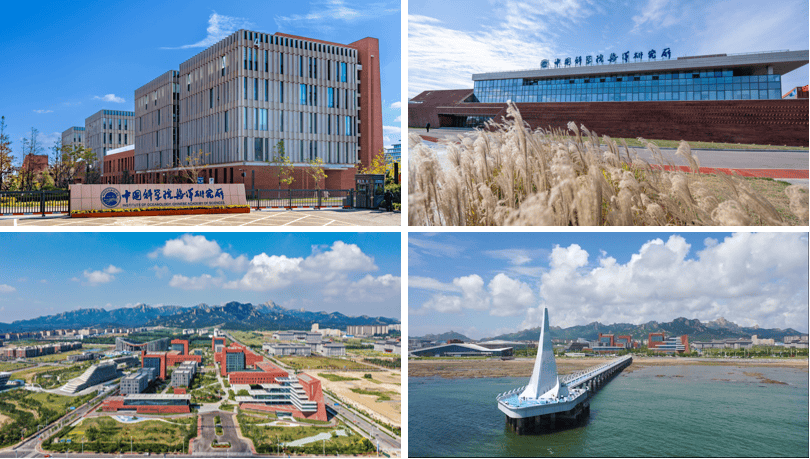
The Institute of Oceanology, Chinese Academy of Sciences (IOCAS), is headquartered in Qingdao, a coastal city in Shandong Province, China. Established on August 1, 1950, it is the first national research institute dedicated to ocean science in the country and is widely regarded as the cradle of marine science in China.
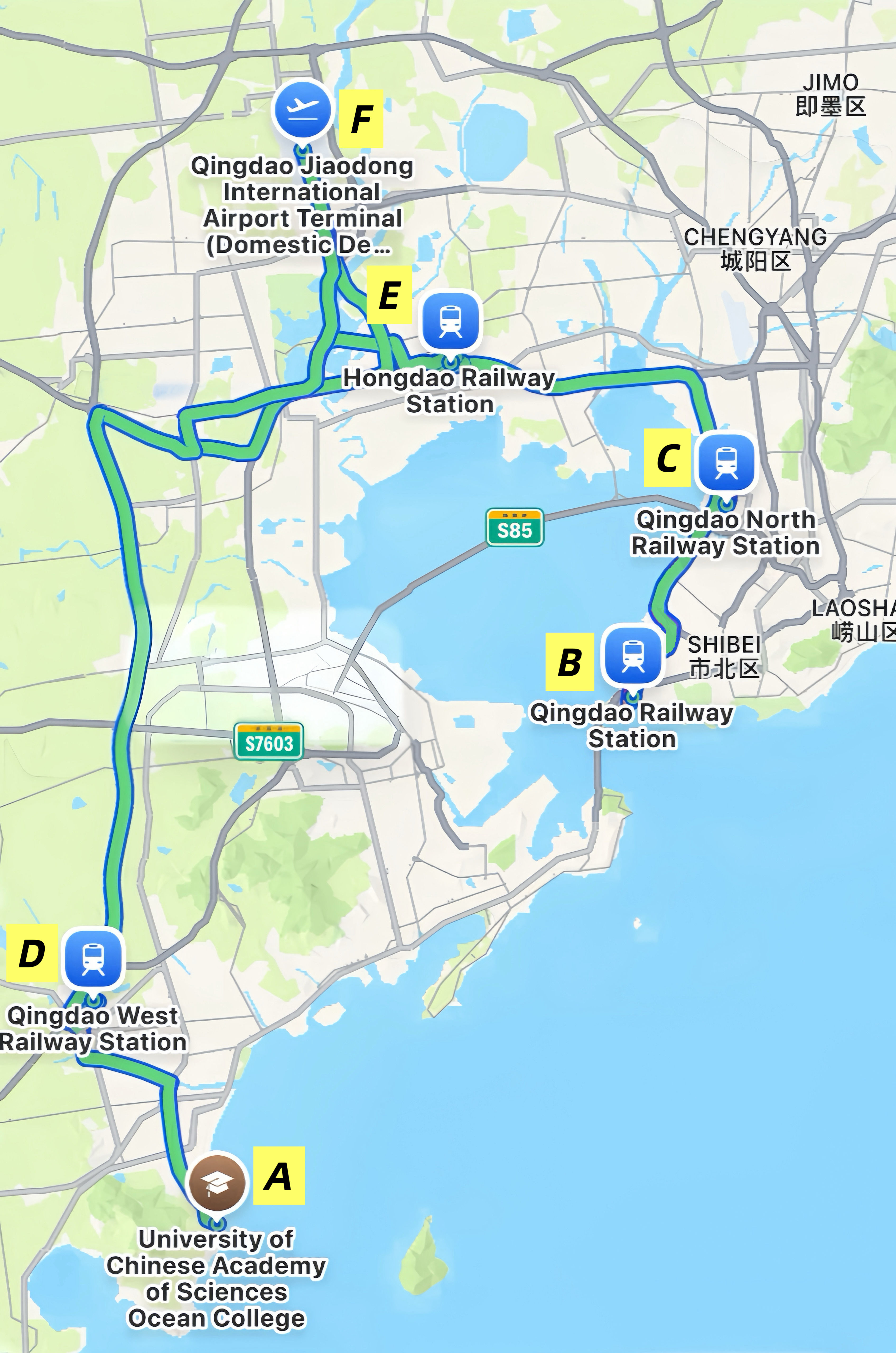
A. Institute of Oceanology, Chinese Academy of Sciences (Huangdao District)
B. Qingdao Railway Station
46 km, 80–100 RMB, 1 h (via Qingdao Jiaozhou Bay Under-sea Tunnel)
C. Qingdao North Railway Station
62 km, 100–120 RMB, 1 h 9 min (via Qingdao Jiaozhou Bay Under-sea Tunnel)
D. Qingdao West Railway Station
19 km, 30–40 RMB, 0.5 h
E. Hongdao Railway Station (remote)
70 km, 120–130 RMB, 1.5 h
F. Qingdao Jiaodong International Airport
72 km, 120–140 RMB, 1.5 h
Note: Airport pick-up and drop-off at Qingdao Jiaodong International Airport will be provided. Attendees’ flight information will be collected closer to the conference dates.
Travel Tips
- Welcome to Qingdao: Essential Travel Information for Your Visit
- 1. About Qingdao
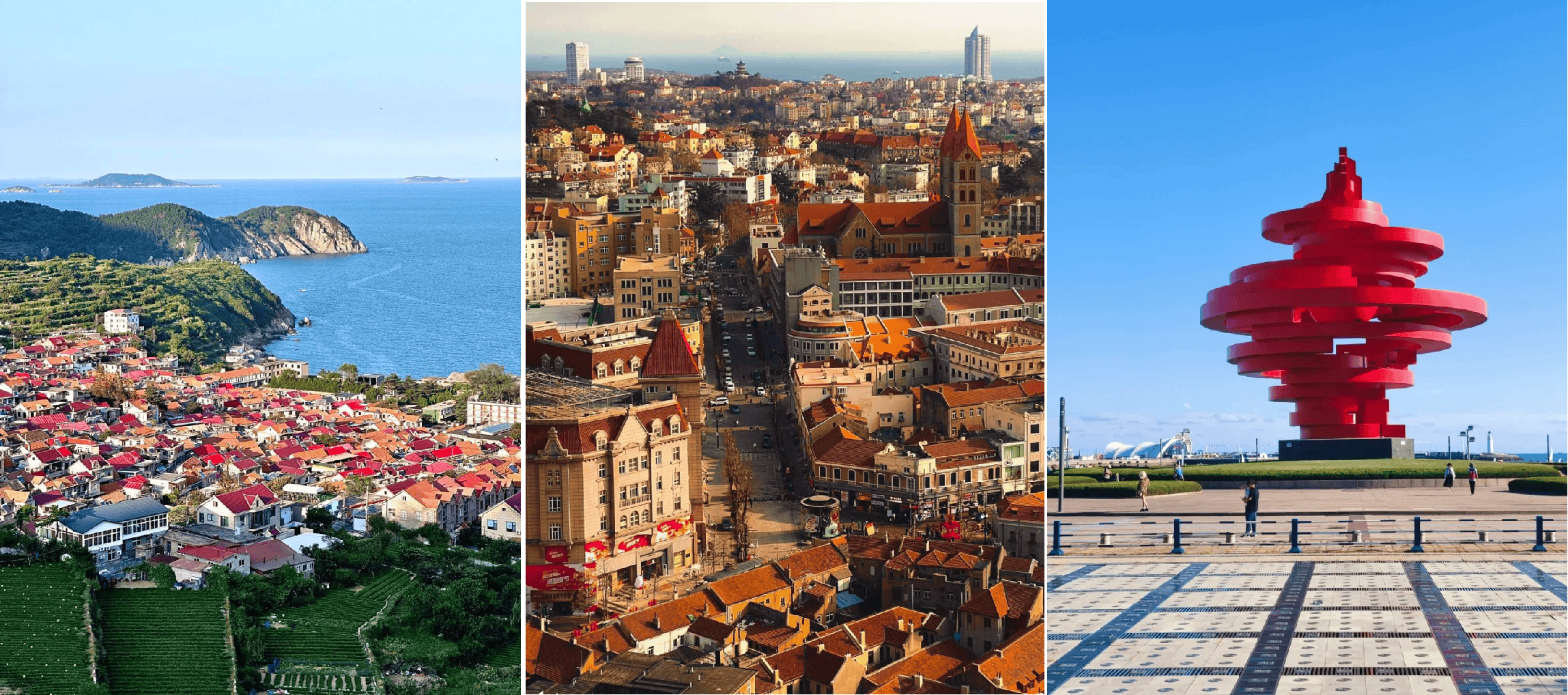
Nestled along the Yellow Sea coast in southeastern Shandong Peninsula, Qingdao is renowned worldwide for its distinctive charm-"red-tiled roofs, verdant trees, azure seas, and sapphire skies". As one of the youngest coastal metropolises in northern China, Qingdao boasts both 6,000 years of human civilization and the European elegance shaped by its historic German architecture. It is not only the "Switzerland of the East"-a city of romance-but also an economic powerhouse celebrated as the "Capital of Chinese Brands".
- 2. Weather
From late June to early July, Qingdao enjoys mild and pleasant early-summer weather thanks to its coastal setting. Daytime highs sit between 24 °C and 28 °C (75 °F – 82 °F), while evenings cool to about 21 °C (70 °F). A brief shower or thunderstorm can roll through in the afternoon or at night, so tuck a compact umbrella in your bag. Lightweight, breathable layers and a light jacket for after sunset are all you need to stay comfortable.
3. Currency Exchange and Payment Methods
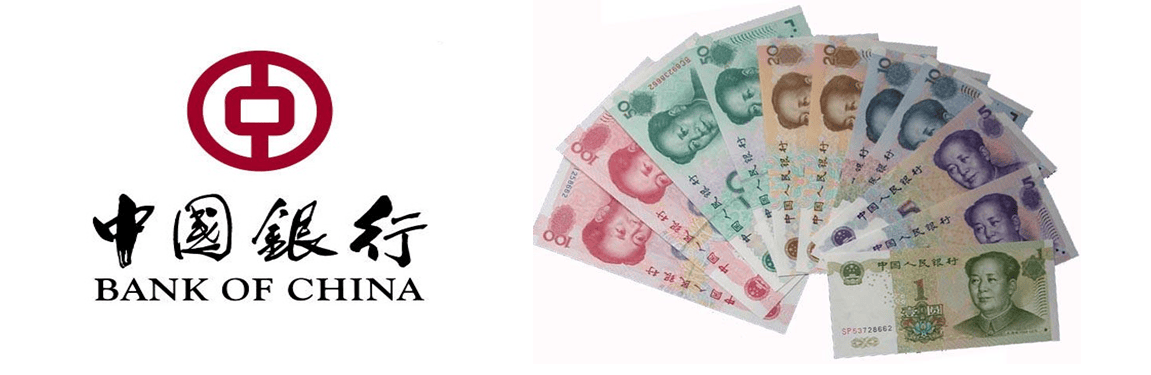
The local currency in China is the Renminbi (RMB), often referred to as the Chinese Yuan (CNY). Currency exchange services are available at airports, banks, and various exchange counters throughout the city. Credit cards are widely accepted in hotels, restaurants, and shops, but it’s a good idea to carry some cash for smaller vendors and markets.
In addition to cash, digital payment methods have become increasingly popular in China. Alipay and WeChat Pay are widely used for transactions, making it convenient to pay for everything from meals to transportation. To use these apps, you may need to set up an account, which may be a bit challenging for foreign visitors. However, you can still give it a try, as these electronic payment methods now support linking many foreign bank cards (such as Visa, Mastercard, Diners Club, and Discover).
4. Wi-Fi
Portable Wi-Fi devices can be rented at major transportation hubs. Check the rental points' location and hours, and remember to return the device promptly to avoid extra charges.
Hotels also provide Wi-Fi service. Guests can connect using a verification code sent to their mobile phone, or use the hotel-provided internet access account for foreign guests.
5. Attractions and Sightseeing
The Qingdao Pier (Zhanqiao) – Our landmark 440-metre pier capped by the octagonal Huilan Pavilion; walk to the end for postcard views of the crescent coastline.
Badaguan – A leafy district of 200+ villas in eight foreign styles (German, Russian, Japanese…). Camellia, wisteria and ginkgo change colour every season, earning it the nickname “World Architecture Expo.”
May Fourth Square – One of China’s largest seaside squares, dominated by the crimson “Wind of May” sculpture and a fountain that dances to lights after dusk.
Laoshan Scenic Area – Birthplace of Taoism’s Quanzhen school, where granite peaks plunge straight into the East China Sea. Ride the cable car above tea terraces and taste Laoshan mineral water at the summit.
Olympic Sailing Centre – Host of the 2008 Olympic regattas; rent a 30-minute sailboat cruise or simply watch yachts skim past the neon-lit skyline.
Tsingtao Beer Museum – Housed in 1903 German brewhouses; see century-old copper vats, enjoy unlimited fresh draught straight from the production line and stamp your own personalised beer label.
6. Additional Tips
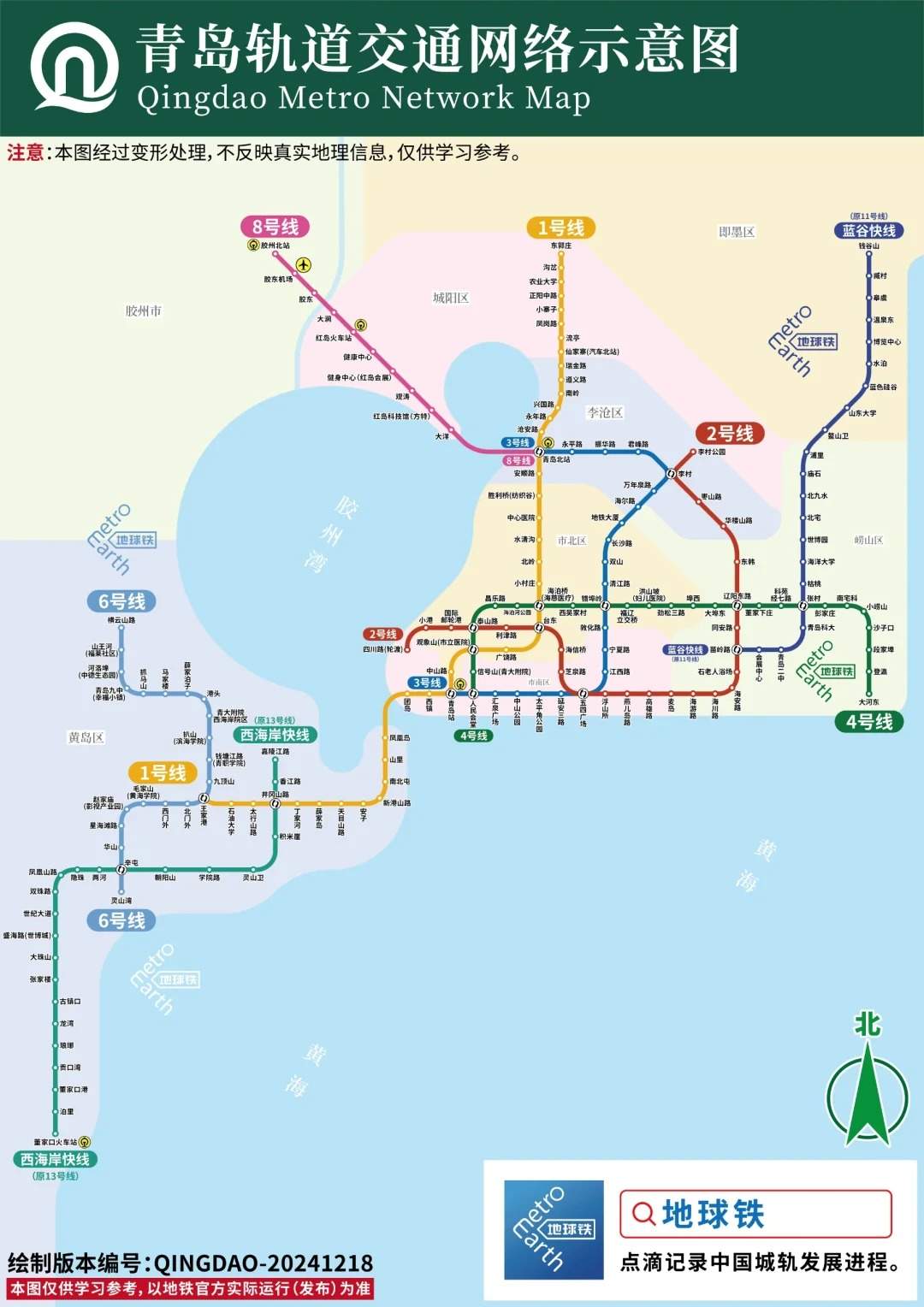
Transportation: Qingdao has an extensive and efficient public transportation system, including subways, buses, and taxis. The subway is one of the most convenient ways to get around the city, and it covers many major attractions. Taxis are also readily available and can be hailed on the street or booked through apps. In addition to cash, you can use digital payment methods like Alipay and WeChat Pay for public transportation, making it even more convenient to navigate the city. In addition to Alipay and WeChat Pay, Visa and Mastercard are also accepted on the Qingdao subway.
Language: While many signs in Qingdao are in English, especially in tourist areas and on public transportation, it's beneficial to learn a few basic Mandarin phrases to enhance your experience. Simple greetings, numbers, and common expressions can be very helpful when interacting with locals. Additionally, translation apps like Google Translate or Pleco can be invaluable tools for overcoming language barriers, allowing you to communicate more effectively and navigate menus or signs with ease.
Safety: Qingdao is generally safe for travelers. However, it's always wise to stay aware of your surroundings and keep your belongings secure.
We hope you have a wonderful time at the conference and enjoy your stay in Qingdao!